

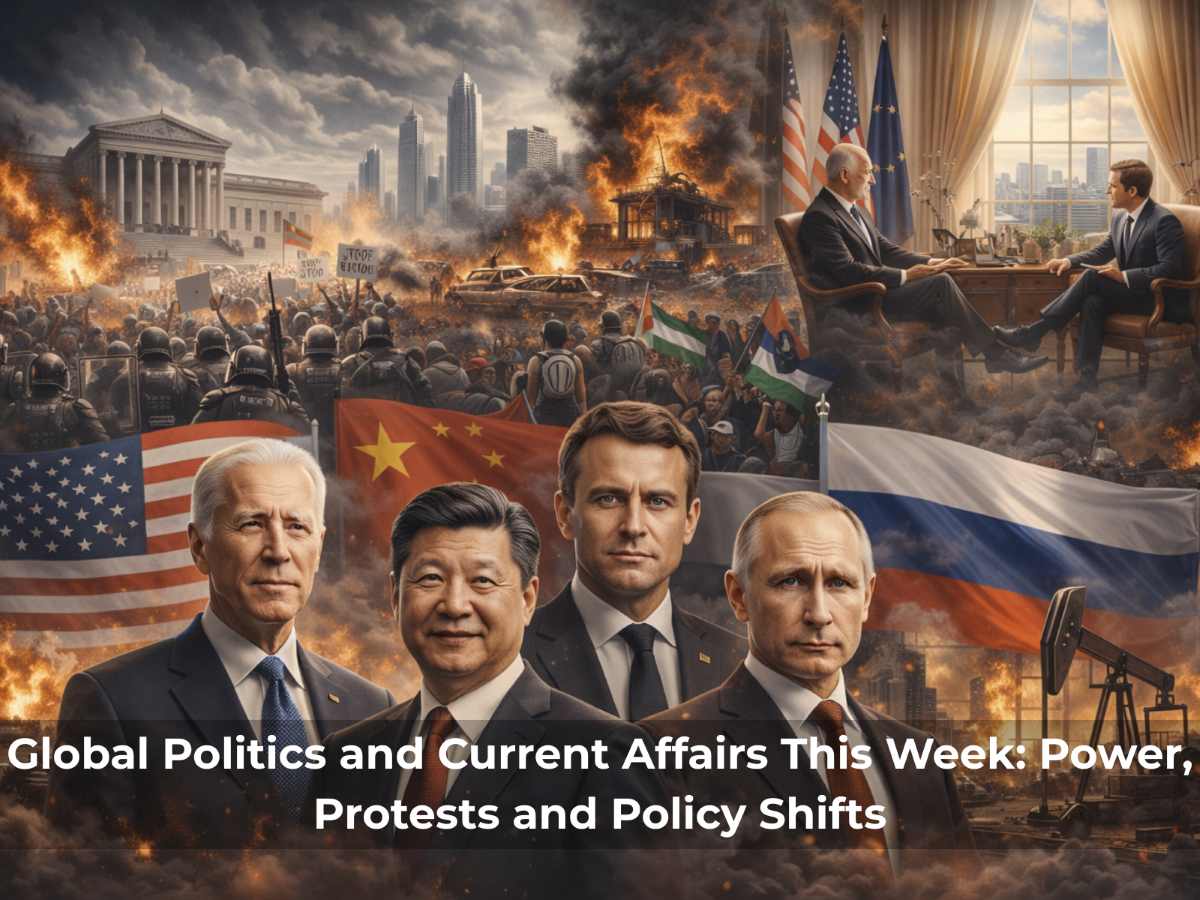
The global politics and current affairs this week paint a picture of a world where domestic drama and international tension constantly collide. Leadership battles, court rulings and heartbreaking outbreaks of violence are unfolding alongside long running debates over climate policy, digital regulation and the growing influence of artificial intelligence in public life.
More than ever, global political news is no longer confined within national borders. What happens in London, Washington or Ottawa quickly ripples outward, shaping markets, security alliances and public trust.
Leadership Strain in the UK and Beyond
In Britain, the governing Labour Party is facing internal turbulence less than two years into office. Prime Minister Keir Starmer has reportedly faced calls to step aside from the Scottish Labour leadership, fuelling speculation about a possible internal revolt. Health Secretary Wes Streeting, often viewed as a potential rival, has publicly supported Starmer. Yet allies concede that the Prime Minister’s authority has weakened, limiting his ability to reshuffle senior figures without intensifying divisions.
This strand of global politics and current affairs this week is about more than party intrigue. It touches on economic policy, NHS reform, climate commitments and the UK’s post Brexit relationship with Europe. Political instability at the top inevitably slows decision making, and that uncertainty filters down to businesses, investors and ordinary households.
From an SEO perspective and in practical terms, UK political instability, Labour Party divisions and leadership challenges are key themes shaping international political developments right now.
US Politics: Courts, Climate and Foreign Policy
Across the Atlantic, global politics and current affairs this week have been shaped by developments in Washington. President Donald Trump is preparing to meet Israeli Prime Minister Benjamin Netanyahu amid renewed tensions with Iran. Middle East diplomacy once again sits at the heart of US foreign policy, raising questions about regional stability and global energy markets.
At home, the administration faces mounting legal and political battles. Efforts to roll back climate regulations have triggered court challenges. Immigration enforcement remains divisive. Lawmakers continue to clash over housing affordability, healthcare funding and federal oversight.
Taken together, these stories define global politics and current affairs this week as a balancing act. Can the United States pursue assertive foreign policy objectives while navigating fierce domestic disagreements over climate change, civil liberties and economic reform? The answer remains uncertain, and the stakes are high.
For those following US political news, climate policy updates, Supreme Court challenges and congressional investigations, this week has offered no shortage of headlines.
Violence and Public Safety in Focus
Not all developments revolve around parliamentary manoeuvres. A tragic shooting in Canada left ten people dead, including the attacker, in a northern town. Such events are stark reminders that no country is entirely insulated from the kind of violence that often dominates American news cycles.
Stories like these add a deeply human dimension to global politics and current affairs this week. Behind statistics are families, grieving communities and urgent debates about public safety, gun laws and social cohesion.
Meanwhile, coverage of a partial US government shutdown has highlighted how political brinkmanship directly affects citizens. Border operations, inspections and public services can stall within days. Political standoffs are not abstract exercises in strategy. They shape livelihoods and public trust in real time.
Public safety concerns, government shutdown updates and gun violence debates have therefore become central components of global political analysis this week.
Democracy, Money and Trust
Another defining thread in global politics and current affairs this week is the question of who really holds power. Investigations into political finance, cryptocurrency ventures and the influence of wealthy donors have resurfaced on both sides of the Atlantic.
In the United States and Europe, parliamentary committees and courts are grappling with issues of transparency, dark money networks and regulatory oversight. Concerns about lobbying, tech industry influence and campaign funding continue to fuel public scepticism.
This climate of scrutiny reflects a broader crisis of confidence. Voters increasingly demand accountability, whether the issue is digital regulation, AI governance, political donations or the handling of sensitive historical files.
Why Global Politics and Current Affairs this Week Matter?
Leadership instability in London, legal showdowns in Washington and tragic violence in Canada may seem like separate stories. In reality, they are interconnected strands of a wider narrative about governance, legitimacy and public trust.
The global politics and current affairs this week remind us that democracy is constantly under pressure. Economic uncertainty, climate change, geopolitical tensions and technological disruption are all converging. Political decisions made today will shape energy policy, national security, cost of living pressures and civil liberties for years to come.
For readers tracking international relations, breaking political news, government policy changes and global security risks, this week offers a clear lesson. Politics is not distant theatre. It shapes jobs, healthcare systems, housing markets and the safety of communities.
In short, global politics and current affairs show that we are living through a period of intense transition. Alliances are shifting. Institutions are being tested. Public expectations are rising. The challenge for citizens is not to disengage, but to stay informed, question power and participate in the democratic process that ultimately determines what comes next.